

Micron Killed the Crucial Brand. That’s the Only Signal You Need.
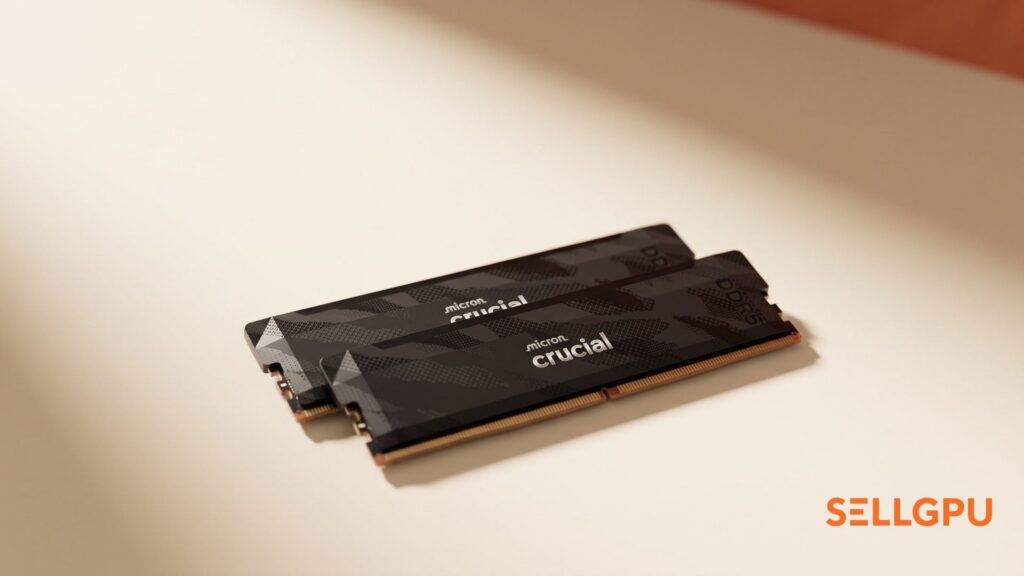
Most of the memory-shortage coverage in 2026 has focused on the prices — the eye-watering percentages, the doubled server modules, the RAM kits that cost more than the graphics cards they sit next to. And the prices are the story people feel. But prices are noise. They spike, they dip, they get argued about on forums.
If you want to understand where this market is actually going — not this quarter, but for years — you don’t watch the prices. You watch what the people who make the memory decide to do with their factories. And in early 2026, one of them made a decision so blunt it should have been front-page news.
Micron killed Crucial.
What actually happened
Crucial was Micron’s consumer-facing brand — the name on the RAM kits and SSDs that ordinary people bought for their gaming rigs, home builds, and laptop upgrades. It was how one of the three companies that dominate global memory production reached the retail market directly. For years it was a fixture on every “best RAM to buy” list.
In February 2026, Micron retired it. The company folded the consumer brand to concentrate on data-center products and high-bandwidth memory — the specialized chips that feed AI accelerators. Around the same time, Micron indicated its high-bandwidth memory was effectively sold out for the entire year, according to reporting by CNBC.
Read that again, because the ordering matters. A major manufacturer didn’t just raise consumer prices. It walked away from the consumer market as a strategic priority — and pointed the freed-up capacity at the buyers who will pay the most.
Why a brand exit is different from a price hike
Here’s the distinction that separates people who understand this market from people who are just reacting to it.
A price increase is a temporary signal. It says “demand is high right now.” It can reverse next quarter when supply catches up or demand cools. Every commodity market does this dance — prices climb, everyone panics, then things normalize. If all you saw were the 2026 price charts, you might reasonably assume this is another cyclical spike that’ll pass.
Killing a brand is a structural signal. It says: “We have looked at the next several years and decided the consumer market isn’t worth our best capacity.” You don’t dismantle a decades-old retail brand over a temporary blip. You do it when you’ve concluded the math has changed permanently — or at least for long enough that the brand isn’t worth maintaining in the meantime.
And the math has changed. High-bandwidth memory earns manufacturers something on the order of three to five times the revenue per wafer compared to conventional DDR5. When one product line pays three-to-five times better, and demand for it is effectively infinite because every AI data center on earth is bidding for it, the rational move is to point everything you can at that line. Micron didn’t make an emotional decision. It made an obvious one.
This isn’t one company — it’s the whole industry
The reason the Crucial shutdown is a signal and not just a corporate footnote is that Micron isn’t acting alone. It’s one of three companies — alongside Samsung and SK Hynix — that together control roughly 95% of the world’s DRAM. And all three have been making the same choice: collectively they’ve shifted the overwhelming majority of their production capacity toward high-bandwidth memory, leaving only a fraction of output for the general-purpose RAM that goes into everything else.
The knock-on effects tell you how committed they are:
- The prices confirm the priority. DRAM contract prices jumped roughly 90% in a single quarter entering 2026, and Gartner has projected memory cost increases on the order of 130%. That’s not demand outrunning supply by accident — it’s supply being deliberately steered elsewhere.
- The big buyers are locking in the future. NVIDIA reportedly secured a memory supply agreement with SK Hynix in the range of half a trillion dollars, reserving enormous future capacity before the consumer market gets a look. The seats at this table are being claimed years in advance.
- Relief is nowhere close. Most analysts don’t expect meaningful loosening before late 2027, and SK Hynix has suggested the crunch could stretch even further out than that.
When one maker exits the consumer brand game, that’s a company decision. When all three are pouring their factories into the same higher-margin product and telling the market relief is years away, that’s a structural realignment of who gets memory and who doesn’t. The retail buyer just got moved to the back of the line, and the sign at the front says the wait is measured in years.
What this means for anyone holding hardware
Follow the logic to its conclusion. If the companies that make new memory are stepping back from the consumer and general-purpose market, then the memory already out in the world — the modules already manufactured, already installed, already sitting in drawers and old machines — becomes a bigger and bigger share of the available supply.
This is already visible with DDR4. New DDR4 is being wound down at the factory as capacity shifts to DDR5 and HBM, which means the growing source of it isn’t a production line anymore — it’s hardware coming back out of the field. Refurbished 32GB DDR4 has been trading around $160–235 while the new DDR5 sits at $400–500. The stuff people used to throw away is now the channel that keeps supply moving.
In other words: when the manufacturers pull back, the secondary market becomes the primary market for a lot of buyers. And that’s not a temporary quirk — it’s the direct, logical result of the structural decision Micron just made visible by killing a brand.
Read the signal before everyone else does
The people who benefit from a shift like this are the ones who recognize it early — while most of the market is still treating “used RAM” as worthless out of pure habit. The manufacturers already told you where things are headed. They said it not with a press release full of optimism, but with a decision: consumer memory isn’t the priority anymore.
That decision quietly raised the value of every module already in circulation. If you’re sitting on memory, CPUs, or whole machines you assumed were near-worthless, the smart move is to find out what they’re actually worth in this market — the one the manufacturers just reshaped — rather than the one you remember.
That’s exactly what SellGPU is for: reading the current market and telling you the real number. Micron already showed its hand. The only question is whether you act on the signal or wait until it’s obvious to everyone.
Get a quote at SELLGPU.com and find out what you’re holding.